
What is Open Science?
Over the past few years, open science has gained an increasingly strong political and legal foundation. Internationally, UNESCO adopted a recommendation on open science in 2021, committing member states to promoting open science across disciplines and national borders. In the EU, the European Open Science Cloud (EOSC) is a central infrastructure initiative for sharing research data and results.
In Norway, the Research Council and other funders have introduced requirements for open access to publications and research data, and in 2017 a national strategy for making research data accessible and shareable was adopted.
Open science encompasses a wide range of tendencies and directions made possible largely by new digital technologies for sharing information.
Open science involves both a continuation of and a critique of existing scientific traditions. Many of the principles of open science build on established principles of good research practice, but also constitute a critique of the tendency to keep much of the research process hidden and to "close off" access to results behind paywalls.
There is a broad range of expected effects of open science. Increased reproducibility and quality, increased value creation, democratisation of knowledge and increased innovation are just some of the benefits frequently mentioned. This does not prevent certain aspects of open science from being contested — the potential for misuse of data for illegitimate purposes and the alleged lower quality of publications in open journals have both been used as arguments against open science.
Aspects of open science
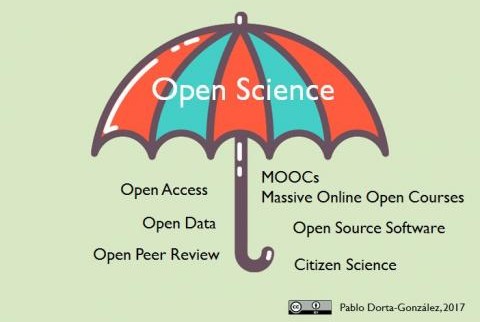
Open science is an umbrella term spanning a wide spectrum of activities and principles.
The most common overviews of open science typically include open access to publications, open data, open source software and open educational resources. Open methodology (including pre-registration of studies, particularly used in clinical trials) and citizen science or public participation are also often included. What counts as open science tends to depend on what is emphasised — what should be open, for whom, and for what reasons. If democratisation and inclusion of the general public is the focus, citizen science is a natural part of open science; but if reproducibility is the main concern, transparency and open data are often emphasised instead.
There are several ways of presenting what open science encompasses. The UNESCO recommendation on open science is among the most central international references, and includes open access, open data, open source software, open educational resources and citizen science as core elements.
Open science in practice: responsible, reproducible and open
In practice, open access to publications and open data have been at the centre of open science. Other elements of open science, such as open source software, open peer review and open educational resources, are nonetheless beginning to receive more attention. This contributes both to making knowledge and research results available to more people, and to making the research process and methodology more transparent and increasingly reproducible and improvable.
Since good management of research data is a prerequisite for both open data and general reproducibility, open science in practice also requires good routines and tools for data management. Good data management practice, including information security and privacy, therefore becomes an important element in the implementation of open science.
In this context, it is important to emphasise that openness in research is not an absolute either/or, but can be achieved partially, gradually, and at different points in time and in different ways. The principle of open science must always be: as open as possible, as closed as necessary. Considerations relating to privacy, research ethics or legal assessments will, for example, set limits on what can be shared openly and what cannot. Open science should always involve responsible and ethical research, with the aim of being as transparent, reproducible and openly accessible as possible.
Text: Open Science Toolbox. Revised and translated by Sikt and Claude (Anthropic)